

Armenia’s Hidden WiFi Dead Zones: Why an eSIM is Your Secret Weapon for Off-the-Grid Adventures
There I was, trying to cram a month’s worth of clothes, two pairs of hiking boots (optimistic, I know), and enough questionable snacks to survive a small apocalypse into a single backpack. The itinerary for the next few weeks involved bouncing from Georgia to Armenia, then maybe a detour through Turkey if the mood struck. My usual pre-trip anxiety was in full swing: did I pack enough socks? Will my dodgy knee hold up on those ancient monastery climbs? And, perhaps most pressingly, how am I going to stay connected without spending half my travel budget on roaming charges or wrestling with dodgy local SIM cards?
Let me tell you, that last one is a real concern, especially when you’re headed for places like Armenia. We’re talking sprawling, rugged landscapes, tiny mountain villages, and ancient sites that predate modern infrastructure by, oh, a few millennia. You’re not exactly going to find a Starbucks with free Wi-Fi every two blocks. This is where an eSIM becomes less of a convenience and more of a non-negotiable lifeline.
Quick Answer: Why You Need This
Look, I’ve done the dance. I’ve landed in a new country, tired and probably a bit cranky, only to drag my suitcase past the currency exchange at Tbilisi International, then across the border into Armenia, trying to find a working hotspot or a reasonably priced physical SIM vendor. It’s a pain. An eSIM solves that. You land, your phone connects, and you’re good to go. No fuss, no frantic searching. At least the internet worked, so that was one less thing to worry about.
“Just Get a Local SIM, Bro!” – Yeah, About That…
Everyone’s got that one friend who swears by local physical SIM cards. “Oh, they’re so cheap!” they’ll exclaim, conveniently forgetting the hour they spent trying to explain in broken Russian that they wanted data, not just talk time, to a bewildered shopkeeper in Vanadzor. Or the time they had to hand over their passport for what felt like a lifetime to register the thing. Don’t even get me started on the faff of keeping track of that tiny plastic chip, or the moment you realize your fancy new smartphone doesn’t even have a physical SIM tray anymore.
The truth is, the disadvantages of physical SIM cards really add up, especially for multi-country trips. You’re constantly swapping them out, often losing your home number temporarily, and if you’re like me, you’ll inevitably drop the tiny tray and spend ten minutes on your hands and knees in a dusty train station. With an eSIM, it’s all digital. One QR code, a few taps, and you’re connected. It supports multi-device use, too, so I can even use my phone as a Wi-Fi hotspot for my tablet or laptop when I’m trying to get some work done from a guesthouse balcony overlooking the Debed Canyon.
The Armenian Highlands: Where “Off-Grid” Becomes Literal
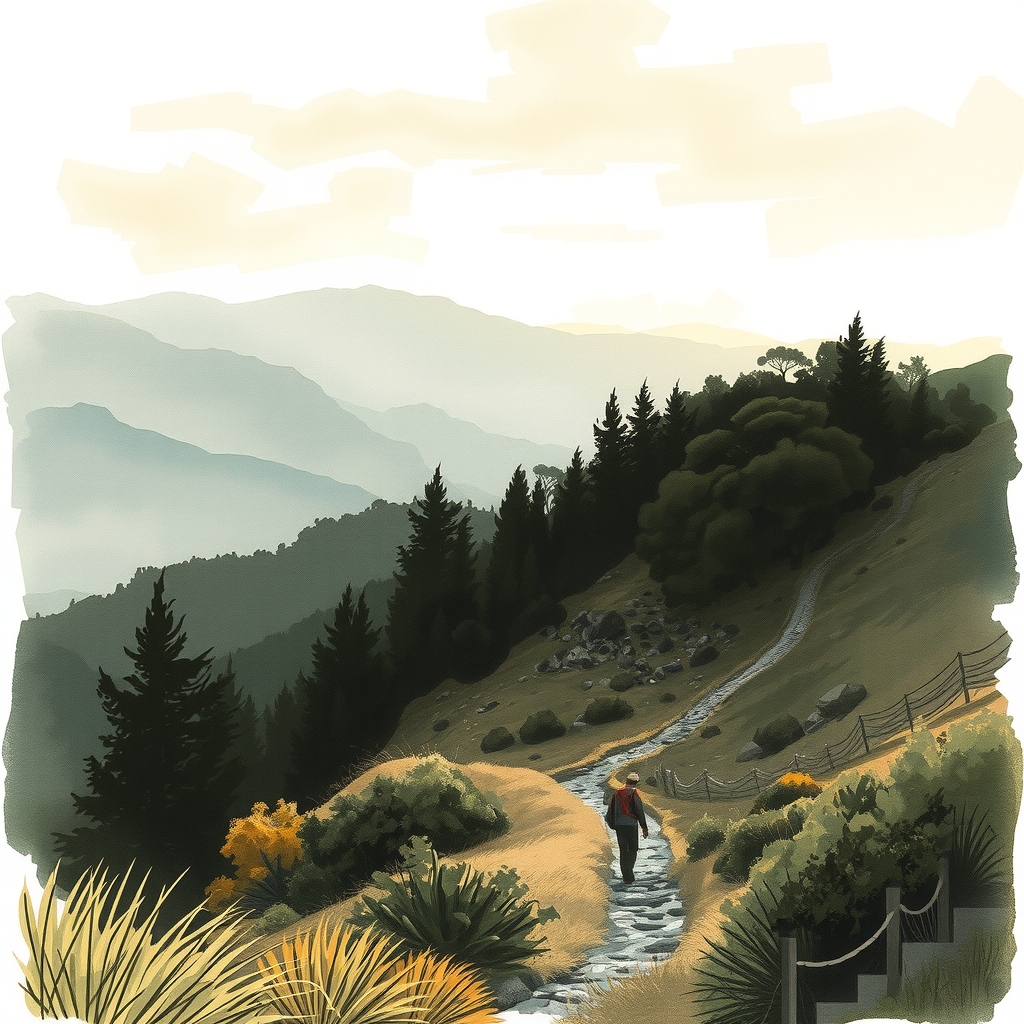
Armenia is stunning, absolutely breathtaking. But it’s also a country where “remote” truly means remote. You’ll be driving through valleys carved by ancient rivers, past shepherds tending their flocks, and up winding roads to monasteries like Tatev or Noravank, perched precariously on cliffs. In these places, even a strong 4G signal can feel like a distant dream. I remember trekking near Lake Sevan, convinced I’d be completely cut off. My friend, who had opted for a local physical SIM, was getting no signal whatsoever. Meanwhile, after a brief moment of dread that it wouldn’t connect, my Roaming2 eSIM, once it finally kicked in (took a moment, but that’s pretty standard for any new connection), allowed me to pull up offline maps and send a reassuring “I’m alive!” message to my mum. The 4G/5G high-speed network support really makes a difference when you do find a signal.
This isn’t about constant Instagram updates; it’s about safety. It’s about being able to call for help if you twist an ankle on a hike, or simply confirming your guesthouse booking in a village where English isn’t widely spoken. And let’s be honest, sometimes it’s just about looking up the ingredients for that amazing khorovats (Armenian BBQ) you just ate.
Crossing Borders: From Georgia to Armenia, and Beyond
My journey started in Georgia, and the plan was to head south into Armenia. This is where cross-border network hassles really used to bite me. That anxious moment as you cross the border, your phone desperately trying to pick up a new carrier, usually settling on some obscure local provider with sky-high roaming rates. Or worse, no signal at all.
With an eSIM, that whole song and dance largely disappears. Roaming2 covers 130+ countries & regions. As I crossed from Georgia into Armenia, waiting for what felt like ages at the border crossing near Bagratashen, I kept an eye on my phone. The network name on my screen switched from a Georgian carrier to an Armenian one (I think it was Ucom or Viva-MTS, can’t quite recall the exact moment), and boom, I was online. No swapping cards, no hunting for a new plan. Just seamless connectivity. This sort of multi-country data plan is seriously a game-changer for regional travel.
Unexpected Data Usage? No Problem.
You think you’ve got your data usage figured out, and then you spend an entire afternoon watching YouTube videos about how Armenian lavash bread is made (it’s fascinating, trust me) because the guesthouse Wi-Fi is slower than a snail stuck in molasses. Or you’re trying to navigate using Google Maps because the ‘directions’ from the local bus driver were… interpretive. Suddenly, that 5GB plan you thought was plenty is looking a bit thin.
With an eSIM, you’re not locked into a long-term contract, which means flexibility. You can just top up if you need more data, or switch to a different plan altogether. It’s all fully digital. My advice? Use a data calculator before you go to get a rough idea, but don’t stress too much. The flexibility is a huge plus. And yes, you can pay with Visa, Mastercard, Google Pay, or Apple Pay – makes it super easy.
Installation, Activation, and the “What If” Scenario
Okay, so you’re sold on the idea. Now, what about the nitty-gritty? Installing an eSIM is usually pretty straightforward. You get a QR code, scan it, follow a few prompts, and you’re set. It’s ready within minutes. I remember when I first tried it, I was a bit paranoid I’d mess it up, but it was genuinely simple. You can even install it at home before you leave, then the plan only activates when you use the first 1MB of data in your destination country. So you have up to 180 days to install it, and the countdown for your plan doesn’t even start until you’re actually using it in Armenia.
And what if something goes wrong? They’ve got online customer support. Plus, if you don’t activate it within 30 days, you can get a 100% refund. If you activate it and something’s genuinely wrong, they offer a proportional refund. It really takes the stress out of committing to a plan.
Oh, and one more thing: make sure your phone actually supports eSIMs. Most newer models do, but it’s worth a quick check on their supported phones list before you buy. I’ve seen enough frustrated travelers trying to get an eSIM working on an ancient flip phone to know that’s a rookie mistake.
The Freedom of Uninterrupted Discovery
Traveling through Armenia is an experience of a lifetime. From the vibrant energy of Yerevan to the serene beauty of the Geghard Monastery (seriously, go see the carvings there – it’s incredible) and the ancient ruins of Zvartnots Cathedral, you’ll want to soak it all in. You’ll want to wander off the beaten path, discover hidden gems, and perhaps even stumble upon a local festival. The last thing you need is to be worrying about finding a signal or racking up insane roaming bills.
Having that constant, reliable connection – even if it’s just for emergencies or a quick map check – gives you a peace of mind that’s truly invaluable. It allows you to be truly present, to explore without fear of being completely disconnected. It allows for those spontaneous detours, like the time I followed a hand-painted sign down a muddy track to a small family-run winery in Areni, and then needed to quickly look up how to say “more wine, please” in Armenian. (It’s «էլ գինի, խնդրում եմ» if you’re wondering—you’re welcome). You can check out more details about Armenia’s public transport system, for instance, on Wikipedia, which might actually be useful if you’re not driving!
So, when you’re packing for your Armenian adventure, skip the physical SIM stress. Go for an eSIM. It’s the smart, simple, and frankly, less annoying way to stay connected when you’re exploring a country as wonderfully wild and full of hidden corners as Armenia.
Ready to explore Armenia without connectivity worries?
Secure your seamless connection for Armenia and beyond. Browse eSIM plans and get connected in minutes!
Ready to Travel?
Get your eSIM now. Connect instantly upon arrival, no SIM swap needed.